


Clean air in your Lemoyne, PA home starts with one small job: changing your HVAC filter on time. Many homeowners aren’t sure how often to replace HVAC filters or what schedule works best. A clean filter helps your system run smoothly, keeps the air fresh, and lowers energy bills. At Leaps & Bounds HVAC, we help Pennsylvania homeowners know exactly when to replace filters so their homes stay comfortable all year.
Understanding How Often to Replace HVAC Filters
Most HVAC filters should be changed every one to three months. The exact timing depends on your system, how much you use it, and your home’s air quality. In Pennsylvania, the weather changes a lot through the year. Filters usually need changing more often during heavy heating or cooling months.
The filter traps dust, pollen, pet hair, and other tiny particles that move through the air. When it gets full, airflow slows down, and your system has to work harder. That means higher bills and more wear on your equipment. Replacing the filter regularly keeps your system efficient and your air clean.
Check your filter every month. If you notice weak airflow, more dust around the vents, or a musty smell when the system runs, it’s probably time to change it. Even if the filter doesn’t look bad, regular replacement is a simple way to protect your home and your comfort.
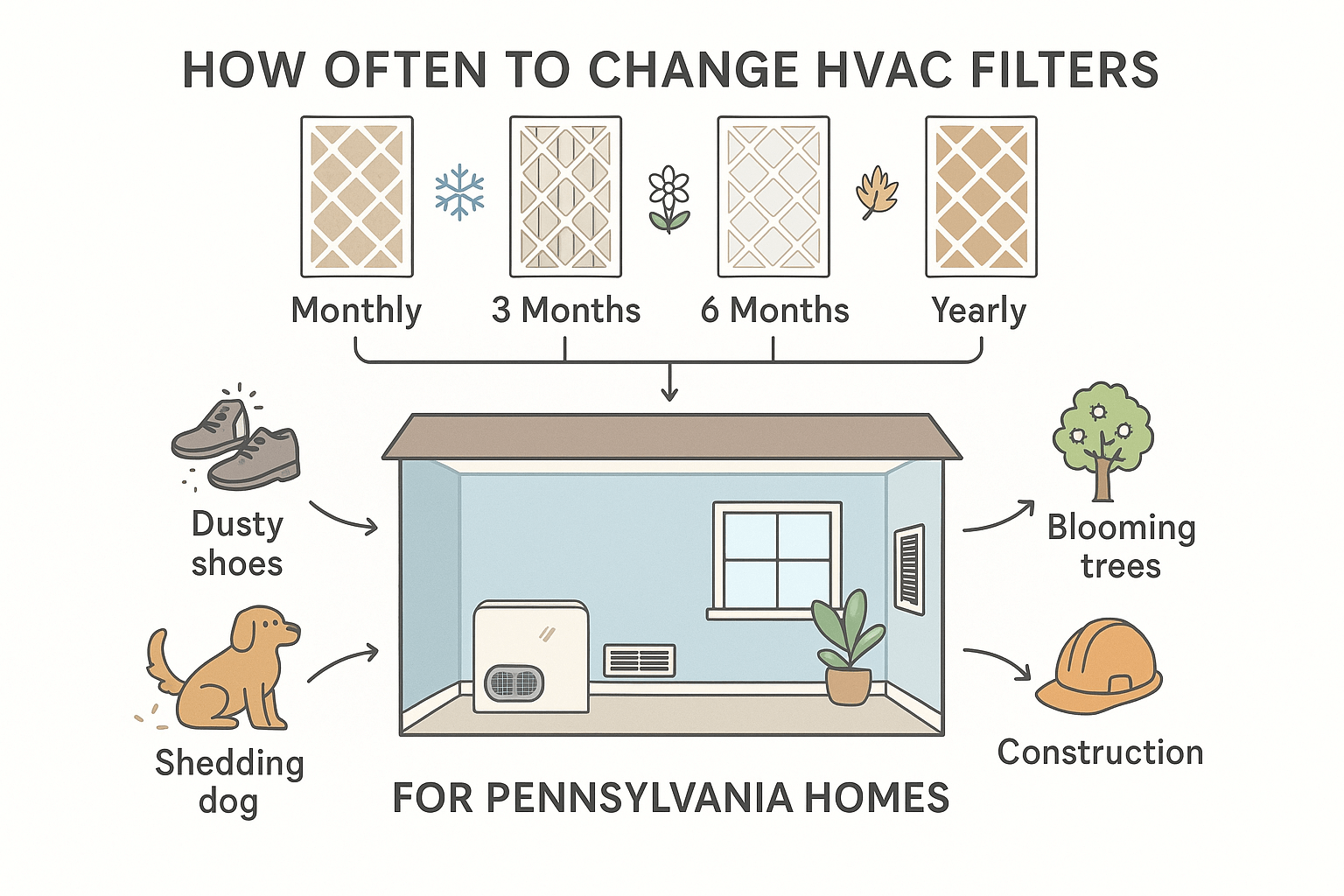
Factors That Affect Filter Replacement Frequency
How often you need to replace filters depends on your home and lifestyle.
Pets:
Homes with cats or dogs need more frequent changes. Pet hair and dander clog filters fast. If you have more than one pet or long-haired breeds, replace filters every 30 to 60 days.
Allergies or Asthma:
If anyone in your home has allergies, clean filters matter even more. During high pollen seasons in spring and fall, change your filter every month to help reduce allergy symptoms.
System Usage:
When your system runs nonstop during hot summers or cold winters, it pulls in more air and dust. That fills the filter faster. During mild months, you may be able to go two or three months between changes.
Home Environment:
Dust, construction, and outdoor air can affect how fast your filter fills up. If you live near a busy road or construction area, you’ll need to change filters more often.
Filter Type and MERV Rating:
Some filters trap more particles than others. Filters with higher MERV ratings catch smaller debris but can fill up faster. Most homes do best with a MERV rating between 8 and 13.
A quick monthly check can help you stay ahead of problems. It takes only a minute and can save you on repairs and energy costs later.
Why Clean Filters Matter for Air Quality and Efficiency
Clean filters make a big difference in both air quality and energy use. They help remove dust, mold spores, and allergens before they spread through your home. That’s important if you have kids, pets, or anyone with allergies.
A clean filter also helps your HVAC system run more efficiently. When air flows freely, your furnace or air conditioner doesn’t have to work as hard. That means lower energy bills and fewer breakdowns. Replacing a dirty filter can reduce energy use by up to 15%.
Ignoring your filter can cause:
- Uneven heating or cooling
- Higher utility bills
- Dusty or stuffy air
- Shorter system lifespan
Changing the filter is quick and inexpensive. It’s one of the easiest ways to keep your home healthy and your HVAC system reliable.
Choosing the Right Filter for Your Home
Picking the right filter helps your system perform its best. Always check your HVAC manual or current filter size before buying a new one. A filter that’s too big or too small won’t seal properly and can let unfiltered air pass through.
Filter Types:
- Fiberglass filters are cheap but only catch larger particles. They need frequent changes.
- Pleated filters capture smaller particles and last longer, making them a good choice for homes with pets or allergies.
- Electrostatic filters attract particles using static electricity and work well in dusty environments.
- Washable filters can be reused but must be cleaned and dried carefully to avoid mold growth.
MERV Ratings:
MERV stands for Minimum Efficiency Reporting Value. It measures how well a filter traps particles. For most homes, filters rated between 8 and 13 are ideal. Filters with higher ratings catch finer dust but may reduce airflow if your system isn’t built for them.
If you’re not sure which filter to buy, Leaps & Bounds HVAC can help. Our team will recommend the right filter for your system and your home’s air quality needs.
Simple Maintenance Tips for a Healthier Home
Changing your filter is only one part of caring for your HVAC system. Try these quick steps to keep everything running smoothly:
- Set reminders. Use your phone or calendar to check your filter monthly.
- Keep the unit clear. Don’t block vents or pile items near the system.
- Schedule seasonal tune-ups. Have your system serviced before summer and winter.
- Use quality filters. Cheap filters may save money upfront but don’t last as long or filter as well.
- Watch for airflow changes. If rooms feel stuffy or uneven, check the filter first.
A few small habits can keep your home comfortable and your system efficient year-round.
When to Call the Professionals
If your air feels dusty, your system runs constantly, or your bills keep rising, it’s time to call in an expert. Our team at Leaps & Bounds HVAC can inspect your system, replace filters, and help you set up a maintenance plan that fits your schedule.
We serve Lemoyne and nearby Pennsylvania communities with reliable HVAC services. Whether you need help choosing the right filter or want to improve your indoor air quality, we’re ready to help.
Ready to Breathe Easier?
Replacing your HVAC filter on time is one of the easiest ways to keep your home comfortable and your air clean. If you’re unsure which filter to use or want help setting up a maintenance plan, contact Leaps & Bounds HVAC today. Our local experts can help you choose the right filter and keep your system running strong all year.
